

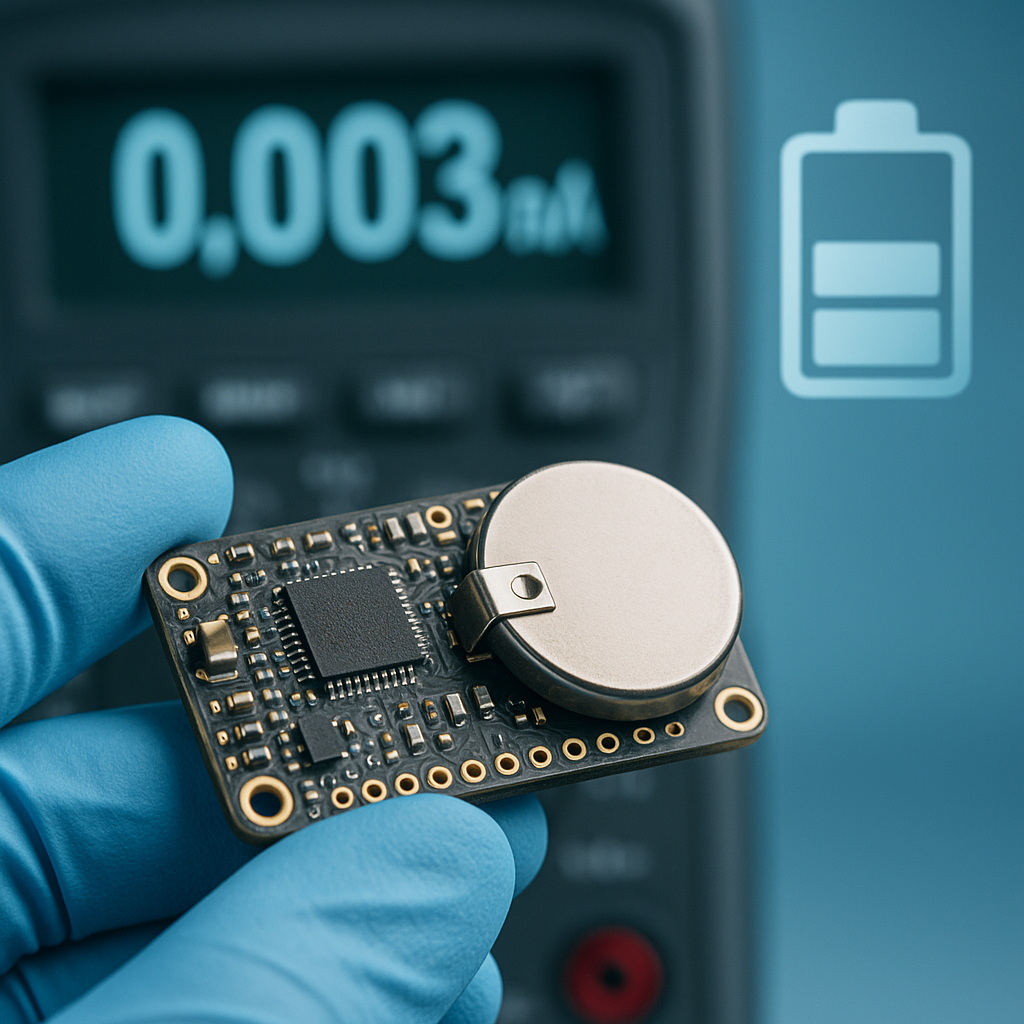
Capability Highlights
- Nanowatt and Picowatt Systems
- Picowatt Sensor Systems
- Low Power Crystal Selection and Real Time Clocks (RTCs)
- Optimal Bypass & Decoupling Capacitors
- Battery Chemistry Nuances (Alkaline, Lithium Manganese Dioxide, Lithium Thionyl Chloride)
- Battery Passivation Considerations
- Quiescent Optimized Linear and Switch Mode Power Supplies (SMPS)
- Power Efficient Component Selection
- Optimization of Microprocessor and Microcontroller Sleep/Doze Modes
- Power Optimized Software & Firmware Designs
Application Summary
In an era where energy efficiency defines product viability, designing ultra-low power systems is a discipline of meticulous detail. Success requires a holistic approach that extends beyond simple component selection, encompassing a deep understanding of battery chemistry, quiescent current optimization, and power-aware firmware architecture. We specialize in engineering these highly efficient systems, where every electron is accounted for to maximize performance and achieve multi-year operational lifespans.
Deeper Dive
A Holistic Approach to Extreme Energy Efficiency
True ultra-low power design is a systems-level challenge, not a component-level one. While the selection of power-efficient components is important, the greatest gains are realized through the intelligent integration of the power source, the power delivery network, and the embedded software that controls them. Our process involves a rigorous analysis of the entire system, from the chemical properties of the battery to the execution timing of the firmware, ensuring every design choice contributes to a singular goal: minimizing energy consumption while meeting all functional requirements.
The Power Source: More Than Just a Battery
The longevity of a low-power device begins with its power source. Different applications demand different battery chemistries, each with unique strengths and trade-offs. We possess deep experience navigating the nuances of common chemistries, from alkaline and lithium manganese dioxide (coin cells) to industrial-grade lithium thionyl chloride for long-life applications. Our expertise extends to critical, often-overlooked phenomena like battery passivation, where a primary lithium battery can develop an insulating internal layer that affects its ability to deliver current. By modeling and designing for these real-world behaviors, we prevent unexpected field failures and ensure reliable, long-term performance.
Precision Power Delivery: Optimizing Every Electron
The circuitry that delivers power is just as critical as the power source itself. We design quiescent-optimized power supplies that consume minimal energy when the system is idle, which is often the vast majority of a device’s life. This requires a careful balance between the efficiency of Switch Mode Power Supplies (SMPS) and the low quiescent current of linear regulators. We even address subtle complexities like the selection of optimal bypass and decoupling capacitors, as these components can introduce leakage and charge/discharge losses that are significant in nanowatt and picowatt systems.
Intelligent Firmware: The Brains Behind the Efficiency
In an ultra-low power system, the firmware is the conductor of the orchestra, dictating precisely when and for how long each part of the system consumes power. Our power-optimized software and firmware designs are architected to maximize time spent in the deepest possible sleep and doze modes. We implement strategies like selecting appropriate low-power crystals for real-time clocks (RTCs) and carefully managing peripheral states to eliminate sources of parasitic power drain. This intelligent control ensures the system only consumes what is absolutely necessary, transforming a collection of low-power components into a truly efficient, long-lasting product.
Ultra Low Power Systems Projects
Projects under NDA. Please contact us!